Butch looks on the Shark 6
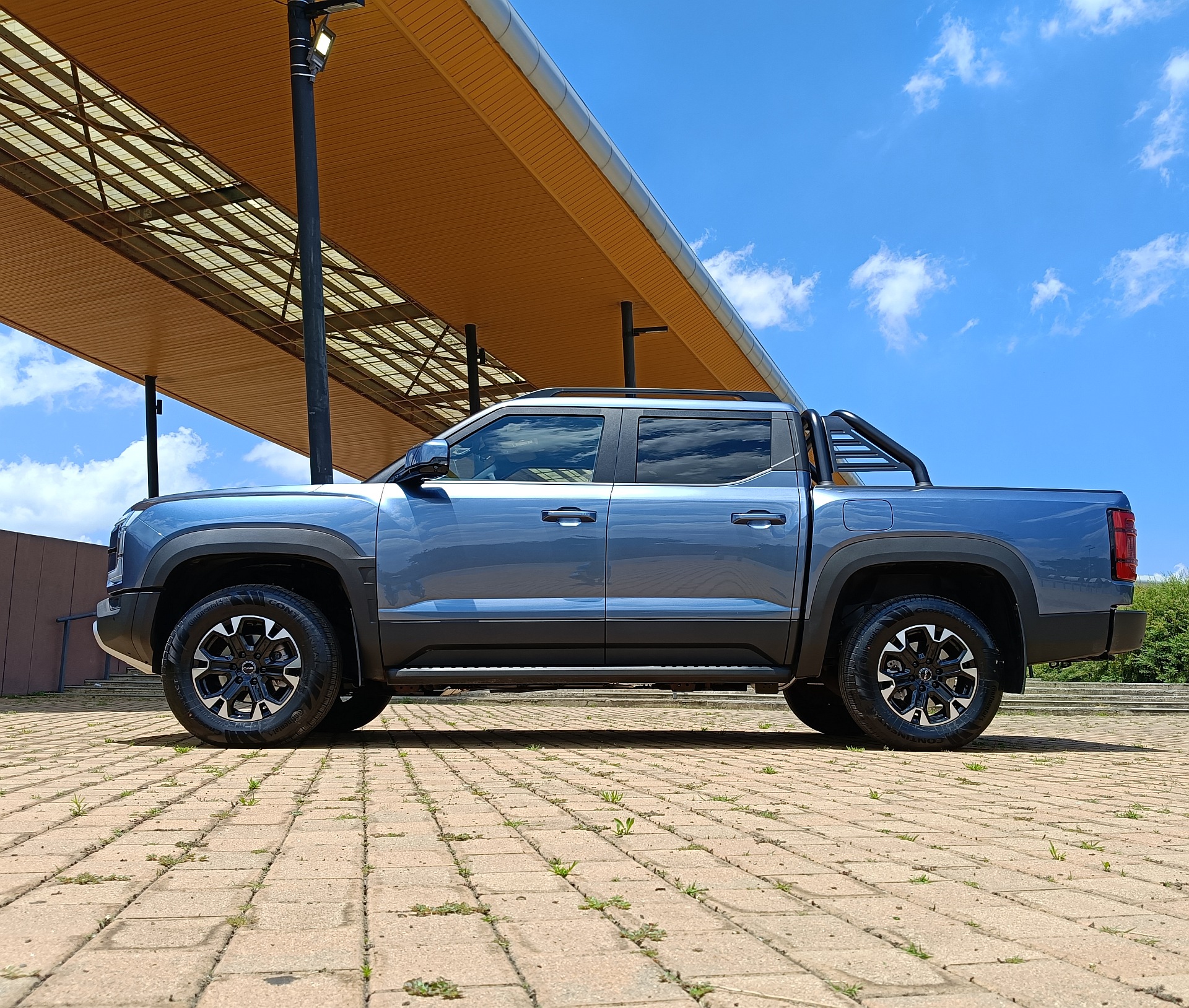
Our test BYD Shark 6 arrived in Atlantis Grey, which looks very much like a blue, with a predatory, aggressive stance that screams capability and presence. It’s not trying to be subtle, exhibiting sharp lines, a bold grille, muscular haunches, while those LED headlights give it a modern, almost futuristic edge for a bakkie. The shark-inspired design works well in the Mzansi context, where double cab bakkies need to look tough, yet contemporary. Some might call it a kind of derivative of other global bakkies, but it stands out on our roads without feeling overdone. The rear is clean and functional, with the tailgate that opens electronically, adding a premium touch which feels right.


How advanced is it?
This is where the Shark 6 shines as a potential game-changer in the bakkie segment. It’s a finalist in SA COTY this year — the only bakkie to make the cut — thanks in part to its DMO (Dual Mode Off-road) plug-in hybrid architecture. The 1.5-litre turbo petrol engine teams up with a 29.58kWh Blade battery and dual electric motors for a combined 321kW and 650Nm. That translates to effortless acceleration (0 – 100km/h in around 7.1 seconds), a claimed combined range of up to 760km, and pure EV driving for shorter trips. It returns around 80km in the real world, depending on driving conditions. The rotating 39.6cm touchscreen is a standout feature and the rest of the tech feels fresh and intuitive. Add in intelligent 4×4 with multi-terrain modes (gravel, mud, sand), high-integrated off-road chassis, and underbody protection, and it’s seriously capable beyond what most expect from a hybrid. Two 3-pin plugs in the load bay (V2L functionality up to 6kW) mean you can power tools, lights, or even a braai setup at the campsite—no generator needed.


How did you find the interior?
Spacious, practical, and surprisingly comfortable for a bakkie built with lifestyle in mind. The cabin is roomy up front with supportive seats, and rear passengers get generous legroom—easily accommodating adults on long drives without complaints. Materials feel solid and modern, with soft-touch surfaces and thoughtful touches like structural handles on the centre console for off-road grip. The infotainment is loaded, the rotating screen is fun and functional, and overall it’s an inviting space whether you’re commuting in Joburg traffic, heading out for adventure, or using it as a mobile office. It’s versatile enough to switch from family hauler to workhorse without feeling compromised.


Did the powertrain impress?
Absolutely. The hybrid setup delivers instant torque from the electric motors for punchy low-end pull, while the turbo petrol kicks in seamlessly for highway cruising. With 321kW and 650Nm on tap, it feels quicker and more responsive than most traditional diesel bakkies—overtaking is effortless, and it handles loads or towing (up to 2 500kg braked) with composure. Off-road, the 4×4 system and suspension soak up rough terrain impressively, backed by those terrain modes. You do however, need to learn the system quite well in order to tackle more serious off-road stuff, because of the fact that it is a Hybrid and it works differently from diesel-power. Also, our unit was not fitted with all-terrain tyres. Fuel efficiency is a highlight: sip petrol when the battery’s charged, or fall back to reasonable consumption when it’s not. It’s not just about power—it’s about effortless versatility for daily life, weekend getaways, or overlanding without constant refuelling worries.


Worth the buy?
At around R960 000, it’s a premium-priced bakkie. For that you get flagship-level performance, tech, and capability in a package that’s unlike anything else in Mzansi right now. It undercuts some pure-performance rivals like the Ford Ranger Raptor while offering hybrid efficiency, EV-like quietness for city runs, genuine off-road vuma, and lifestyle features like those load-bay power outlets and the electronic tailgate that let you plug in your appliances and extension cords. For buyers wanting a versatile do-it-all double-cab that handles family duties, adventure escapes, work loads, and even loadshedding backup, it’s a compelling choice. Resale might still be a question mark as BYD is a newer brand in Mzansi. But the sheer innovation and capability could make it a smart, forward-thinking buy.
QUICK STATS
BYD SHARK 6
POWERTRAIN: 1.5-litre, 4-cylinder turbo petrol + dual electric motors plug-in hybrid, 29.58kWh battery
POWER: 321kW (combined)
TORQUE: 650Nm (combined)
0 – 100KM/H: 7.1 seconds
GEARBOX/ TRANSMISSION: E-CVT / Intelligent 4×4
TOP SPEED: 160km/h
COMBINED RANGE: 760km
ELECTRIC RANGE: 85km
FUEL AVERAGE: 7.7L/100km
TOWING: 2 500kg braked, 750kg unbraked
PRICE STANDARD: R960 000
NATURAL RIVALS: Ford Ranger Raptor, GWM P500, Isuzu D-Max AT35, Toyota Hilux GR-S
BABE-MAGNETIC FACTOR: Medium-High
*PRICE RIVALS: Alfa Romeo Junior Elettrica Veloce, Audi A5 TFSI, BMW 320d, Changan Deepal S07, Chery Tiggo 9 CSH, Ford Ranger Tremor, GWM Tank 300 HEV Ultra Luxury, Honda CR-V Executive, Hyundai Staria Elite, LDV Terron 9, Lexus ES 300h.
*Vehicles within roughly R30 000 and R50 000 or so of the price spectrum for cars over R800 000.